5 Benefits of Adding an ADU to Your Property
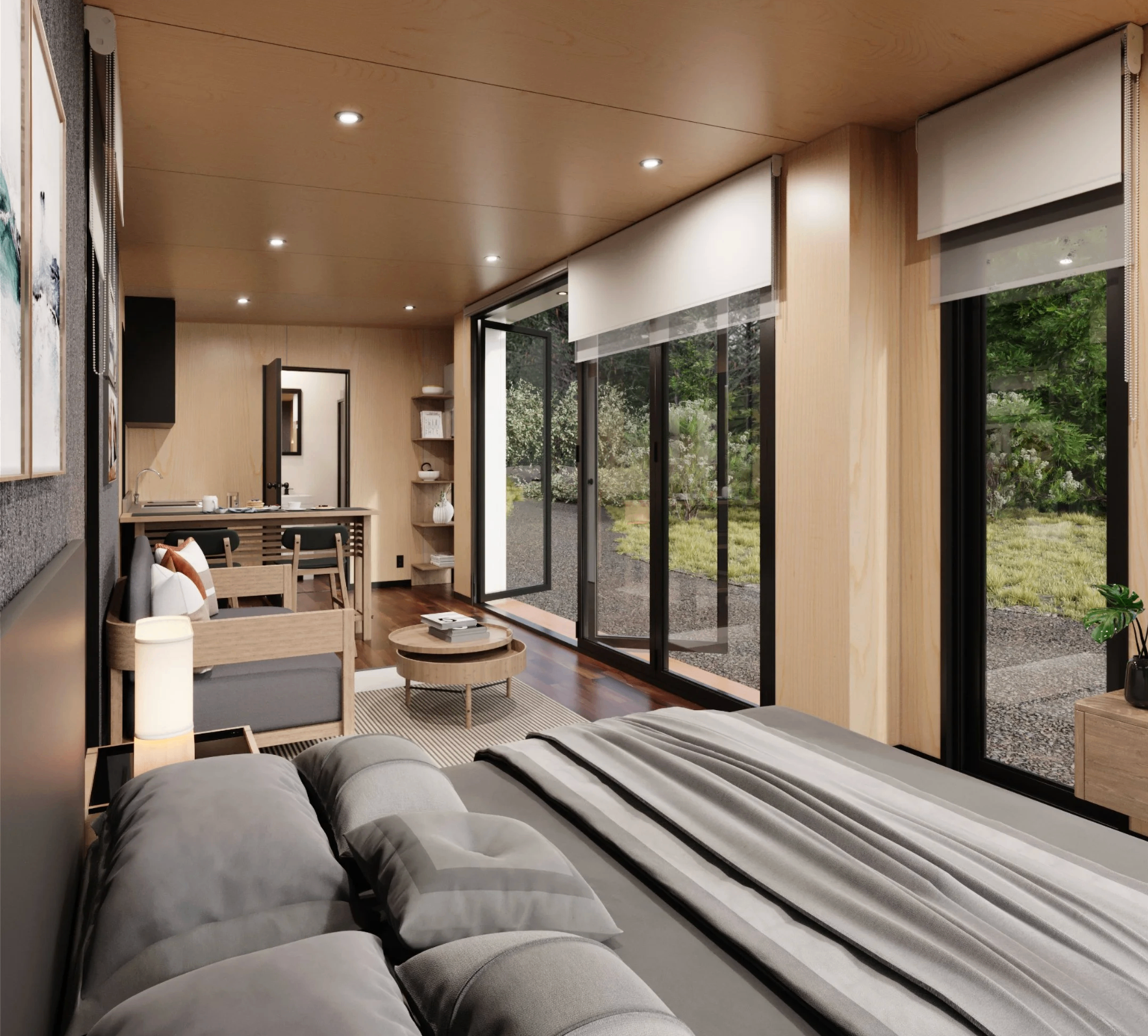
Adding an accessory dwelling unit (ADU) to your property can be one of the most flexible investments you make in your home. Whether you're thinking about rental income, creating space for family, working from home, or simply planning for the future, an ADU can provide options that a traditional addition often can't.
For Minnesota homeowners, there are some additional things to consider. Our climate, local zoning requirements, snow loads, insulation requirements, and long heating season all play a role in how an ADU should be designed and built.
Here are five of the biggest benefits to consider.
1. Increased Property Value
An ADU can add significant value to your property by providing additional usable living space and giving future buyers more options.
The actual impact on property value varies depending on the size and quality of the ADU, the location of your property, local housing demand, and whether the structure is legally permitted as a dwelling. A well-designed and properly permitted ADU is very different from simply putting a finished shed in the backyard.
In Minnesota, it's especially important to think about the building as a year-round living space. Proper insulation, air sealing, energy efficiency, windows, heating and cooling, and construction methods designed for our climate all contribute to a space that is comfortable in January as well as July.
An ADU isn't just additional square footage. It's additional functionality that can make your property more useful today and more attractive in the future.
2. Rental Income Potential
One of the biggest reasons homeowners consider an ADU is the potential to generate rental income.
Depending on your location and local regulations, an ADU may be rented to a long-term tenant or, in some areas, used as a short-term rental. Rental income can help offset the cost of construction, supplement your monthly income, or provide another source of income later in life.
There is an important caveat here: rental rules vary considerably from one Minnesota municipality to another. Zoning, parking requirements, owner-occupancy rules, licensing, and restrictions on short-term rentals can all affect how an ADU can be used.
Before designing the building around a rental strategy, it's worth checking with your city or township to understand what is actually allowed on your property.
3. Multi-Generational Living
An ADU can provide something that is increasingly difficult to find: proximity without giving up privacy.
For families with aging parents, an ADU can provide a comfortable living space close enough to make family life easier while allowing everyone to maintain their own routines. The same concept works for adult children who need a place to live while getting established.
It can also be a great option for extended family and long-term guests.
And unlike adding another bedroom inside your existing house, an ADU gives everyone a little more separation. Sometimes that's exactly what a family needs.
4. Home Office Space
Working from home is much easier when your office doesn't share a wall with the kitchen, the television, the laundry room, and everyone else who happens to be home that day.
An ADU can create a dedicated workspace that is physically separated from the house. That separation can make it easier to focus, take video calls, meet with clients, or simply shut the door at the end of the workday.
For Minnesota homeowners, a year-round backyard office needs to be treated like a conditioned space, not a seasonal shed. That means proper insulation, air sealing, windows and doors, heating and cooling, and a building envelope designed to handle our cold winters.
And there's another benefit: when the home office is no longer needed, you haven't built a space with only one purpose.
5. Future Flexibility
This may be the biggest advantage of an ADU.
Your needs change.
The space that starts as a home office could eventually become a guest suite. A guest suite could become housing for a parent. A rental unit could eventually become a place for your adult children.
That's why we think about backyard structures as more than just buildings. The goal is to create a space that can adapt as your life changes.
What Makes a Minnesota ADU Different?
Building an ADU in Minnesota isn't simply a matter of putting a small building in the backyard and adding a bathroom.
Minnesota's climate demands a building envelope designed for significant temperature swings and long periods of cold weather. Insulation, air sealing, moisture management, windows, doors, roofing, and heating and cooling all need to work together.
Snow loads are another consideration. Roof structures need to be designed for the snow load requirements that apply to the specific location, rather than assuming that a structure suitable for a warmer climate will perform the same way here.
And before construction begins, you'll need to understand the zoning and building requirements for your particular property. Minnesota cities and townships can have different rules regarding ADUs, setbacks, lot coverage, size, parking, utilities, and where an ADU can be located.
That's why we recommend starting with the property and the intended use—not the building.
Planning an ADU in Minnesota?
Before you start drawing floor plans or ordering materials, it's important to understand both the state building code and the local zoning requirements for your property. Minnesota DLI provides a number of useful resources, including a specific fact sheet explaining what happens when a storage shed is converted into a dwelling or ADU.
Helpful Minnesota resources:
Keep in mind that building code and zoning are two different pieces of the puzzle. The state establishes construction requirements, while your local jurisdiction may have additional rules about whether an ADU is allowed, where it can be located, its size, setbacks, height, parking, and other site-specific requirements.
ADU, Backyard Studio, or Something Else?
Not every homeowner actually needs an ADU.
If you don't need a kitchen or independent living accommodations, a backyard studio or dedicated accessory structure may provide everything you're looking for without the additional complexity of a dwelling unit.
A home office, art studio, music room, workshop, fitness space, or hobby room can all be excellent uses for a backyard building.
The right solution starts with asking a simple question:
What do you actually need the space to do?
At Midwest Accessory Structures, we believe the building should serve your life—not the other way around.
Whether you're planning for family, rental income, work, hobbies, or simply more room to live, an ADU or backyard structure can create possibilities that extend well beyond the four walls of your house.
More space for your life.
Related Reading

Written by Troy
Founder, Midwest Accessory Structures
Troy helps homeowners across Minnesota create purposeful backyard spaces so they can focus on what matters most.